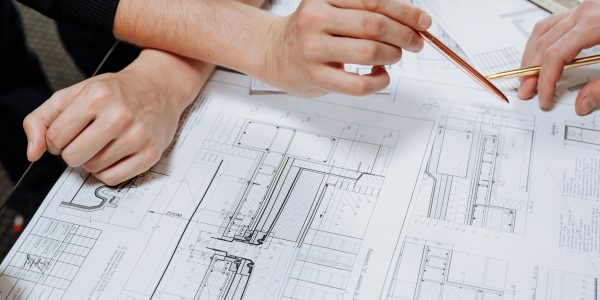
A guide to the RIBA Design process

For our commissions that include design work, we follow the RIBA Plan of Work, as per industry best practice. Those in the industry will be familiar with the RIBA Plan of works, and various stages, but for those who are unfamiliar with the process, we have broken it down into each stage, and how you could anticipate your project progressing through the stages.
The RIBA Plan of Work is a framework that outlines the eight key stages of a successful construction project. We follow this framework to help keep your build on track, and to make sure that the process is as streamlined and transparent as possible. We’ll help guide you through the following eight stages of your project:

Stage 0: Strategic Definition
This step is all about your vision for the project. As part of the Strategic Definition stage, we can work with you to identify and agree on your requirements. We’ll help draw upon any previous experience you might have, as well as your ultimate aims for the project, and incorporate these into a clear briefing criteria for us to follow and measure against as the project develops.

Stage 1: Preparation and Briefing
Stage 1 is where we agree and finalise your brief, and start to assess the feasibility of the project including your budget. At this stage, assuming that the project appears viable, we can recommend site surveys we think will be needed – usually beginning with a measured survey, which we can conduct for you.

Stage 2: Concept Design
Your proposals will now be coming to life! We’ll start providing you with concept design drawings that align with your brief and draw on the criteria established in the previous stages. The designs will also identify implications of the concepts on later stages, such as planning advice and technical considerations.
By the end of this stage, we’ll provide a ‘design freeze’ package, which is where your preferred concept design is agreed and ready to progress. Consideration for specialist services that might be required for your project will also be highlighted here (for example, structural engineering or Party Wall services). Once the concept has been finalised, we will progress to the next stage.

Stage 3: Spatial Coordination
Next, we compile a detailed design package that will help to obtain any necessary permissions (such as planning consent, if it is needed for the project). We will also complete a cross-reference against building regulations requirements for your chosen design, to make sure it’s compliant. We’ll submit the final planning package to you, ready for your review and approval, and will then submit the package to your local planning authority.
Generally, to minimise your risk, there will now be a standstill period while the planning application is processed by your local authority. We will monitor, chase progress, and communicate any feedback between you and the planning department. If planning is not required, we’ll proceed straight to Stage 4.

Stage 4: Technical Design
Now that you’ve got planning permission – or can proceed without it – we can get into the technical details about how your project will meet statutory conditions, such as building regulations. We’ve considered this throughout all of the previous design stages, but will finalise the details during this stage. Specialist services such as structural engineering will be developed at this point, and any planning conditions stipulated by the approval will be reviewed and discharged as well during this phase.
At the end of this stage, we’ll send our technical design package to you for review and, once you’ve approved it, we’ll submit the package to the agreed building control body (either the local authority, or an approved inspector). These drawings and technical details can also be used to finalise the costs with your chosen builder, so that your work can begin! If you would like a detailed design and specification package (such as a schedule of works) we can also compile this during this stage.

Stage 5: Manufacturing and Construction
Once your builder or contractor has started on site, we’ll help with answering any building control queries from your builder or the building control body. If you’ve asked us to act as a project manager or contract administrator, we’ll take a more hands-on approach and report to you regularly on progress and any client decisions that need to be made.

Stage 6: Handover
If you need help during the handover process, we can offer our services here too. Our main role will be ensuring that the building control process is completed, that planning conditions are complied with, and that you’ve received your building control certificate. If we are the contract administrator, we’ll also be formally involved in signing off works throughout the project, and during the handover stage.

Stage 7: Use
Congratulations, your project is complete! During this final stage, we can look at any new projects you might have from RIBA Stage 0, discuss any feedback on this project for implementation on future builds, and answer any technical queries you might have for us, following a successful project.
We can also use our building surveying expertise to advise on any common issues that might arise during the use of the building.
Plan your project today
We work on projects of various sizes, and collaborate with industry experts where needed to deliver a tailor service.
To discuss your project and see how ARJ Surveying & Design can support you, contact us today!